


Peacock Feathers Belong to Nature
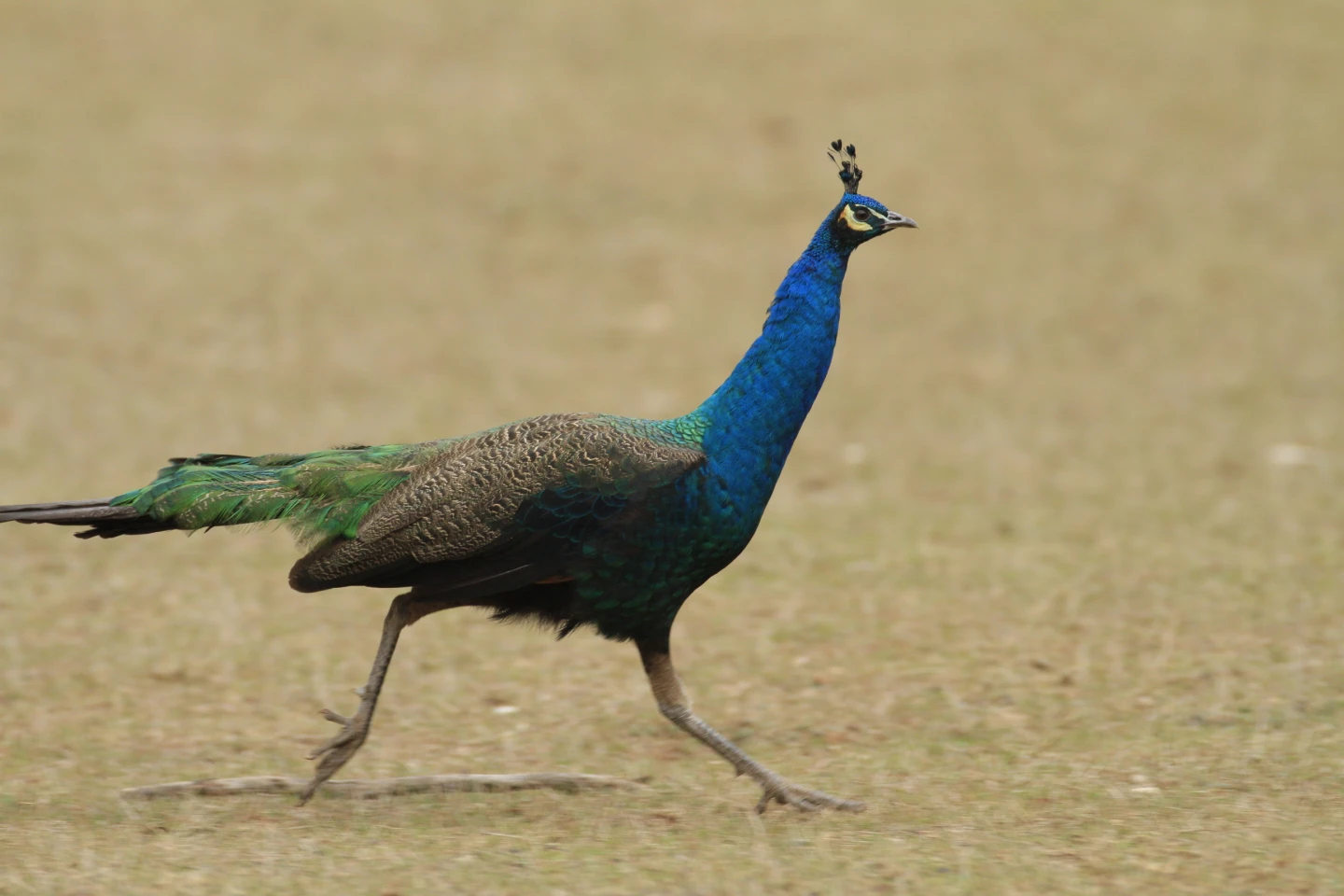
Peacocks (lat. Pavo) are one of the most recognizable bird genera and have long inhabited the area of Veliki Brijun. They originate from Southeast Asia and the Indian subcontinent and are closely related to pheasants. Today, two species are distinguished: the well-known Indian peafowl (lat. Pavo cristatus), native to India and Sri Lanka, and the green peafowl (lat. Pavo muticus), which is slimmer and has green plumage, inhabiting areas in Bangladesh, Myanmar, Vietnam, Laos, Thailand, and Indonesia. In India, peacocks are the national bird, symbolizing wealth and power.
Male peacocks are widely recognized for their extravagant tails, consisting of long, colorful feathers with round patterns, which can be fanned out magnificently during courtship displays to attract females. They shake their tails to create visual effects and sound vibrations. These feathers are shed annually after the mating season, and during winter and spring, they grow back, ready for the next season. Young males do not develop their full tails until their third year of life. Females are far less conspicuous, with primarily brown and gray feathers. In the wild, peafowls can live up to 20 years, and even longer in captivity. Omnivorous by nature, they feed on seeds, plants, insects, and even small reptiles. According to wildlife protection programs, peacocks are not classified as protected species. They are highly adaptable and are often raised and established beyond their native range by humans.
Many years ago, peacocks were introduced to Brijuni National Park as exotic animals. Even today, their magnificent tail feathers and charming appearance capture the attention of visitors.
As peacocks roam freely across Veliki Brijun, they shed feathers everywhere, and visitors often collect them as beautiful keepsakes or souvenirs. However, we would like to remind you that taking or removing peacock feathers from Brijuni National Park is prohibited under the Nature Protection Act of the Republic of Croatia (NN 80/13, 15/18, 14/19, 127/19, 155/23) and the Regulations on Internal Order of Brijuni National Park.
According to Article 139 of the Nature Protection Act, in protected areas, it is strictly prohibited to collect, catch, or disturb wild species that are not strictly protected in nature reserves, special reserves, and national parks. Article 19 of the Regulations on Internal Order of Brijuni National Park states that collecting any part of living or non-living nature (e.g., mushrooms, asparagus, wild plants, shells, pebbles, fragments of pottery, mosaic pieces, or shell remains) is prohibited.
Peacock feathers, though non-living, are part of nature and play a role in maintaining the ecosystem's balance. Removing them disrupts an already fragile equilibrium, especially in protected areas of national significance like national parks. One of the primary goals of Brijuni National Park is to preserve biodiversity, landscape diversity, and geodiversity in harmony with human activity.
Therefore, we kindly ask visitors and all present within Brijuni National Park to adhere to the rules and regulations available on our website (LINK) to ensure the preservation of the natural beauty around us.
Below are some fascinating facts about peacocks to help you better appreciate these charming birds!
Interesting Facts About Peacocks
- Feather Color: The vibrant colors of peacock feathers are not due to pigment (their original feathers have brown pigment) but rather structural coloration. Microscopic structures in the feathers absorb and reflect light to produce vivid blue, green, and golden hues.
- Leucism: Some peacocks exhibit genetic variations/mutations called leucism, preventing melanin deposition and resulting in completely white feathers. Unlike albinism, leucism occurs exclusively in Indian peafowl, whose chicks initially have a yellow hue that turns white as they age. Peacocks can also have partially colored and partially white feathers.
- Loud Calls: Peacocks are known for their loud and piercing calls, especially during mating season, and their sounds can often be heard on Veliki Brijun. These sounds may also serve to alert other birds of predators.
- Seasonal Molting: Male peacocks shed their spectacular tail feathers annually after mating season. This process, called molting, typically occurs in late summer or early autumn, and new feathers grow during winter and spring, ensuring they are ready for the next mating season.
- Symbol of India: In 1963, the Indian peafowl (Pavo cristatus) was declared the national bird of India. According to the IUCN, its range covers most of the Indian subcontinent, and the species is considered of least concern. The peacock holds a prominent place in Indian art and Hindu religious culture, associated with gods and goddesses, as well as royalty. For instance, Hindus believe the god Krishna wears a peacock feather in his crown.
- Short Flights: Despite their long and heavy tails, peacocks can fly short distances, typically to escape predators or reach tree branches for shelter and nesting at night.
- Female Sensory Adaptations: Peahens have special sensors in their crests that allow them to detect vibrations from distant males. The feathers of the males are tuned to vibrate at specific frequencies when they rattle their tails—25 times per second—producing pressure waves that catch the attention of females.
Author of Text: Damir Pocrnić
Photos: Brijuni National Park Professional Service
Sources:
Lost Paradise – Marija Lenz Guttenberg
Ullah, R., Azam, A., Aziz, T. et al., Peacock Feathers Extract Use as Template for Synthesis of Ag and Au Nanoparticles and Their Biological Applications, Waste Biomass Valor (2022).
Krapinec, Krešo: Wildlife Protection Program